The Sọrọ Sọkẹ Blog
Learning, memory,
and how to say the right thing.
Articles on spaced repetition, vocabulary, conversation skills, and the science of memory — written for people who want to communicate better.
 Featured
Why Talking to an AI Can Actually Make You Better at Talking to Humans
It sounds backwards — practicing a human skill on something that isn't human. But the research on how expertise is actually built explains exactly why it works, and why 'just talk to more people' rarely does.

You Read the Report. So Why Did Your Mind Go Blank When They Asked What You Think?
You did the reading. You understood it. Then someone asked what you thought and the answer wasn't there. The gap between reading a document and being able to speak on it is bigger than most people realise.

How to Disagree Well: Why Arguing Is a Skill Almost Nobody Practices
Most people handle disagreement in one of two broken ways: they avoid it, or they try to win it on volume. Structured argument is a trainable skill — and almost nobody trains it.

What Your Voice Reveals About You Before You've Finished Your First Sentence
Research shows listeners form strong impressions from vocal cues before they've fully processed your words. Here's what those cues are, what they signal, and how to develop them deliberately.
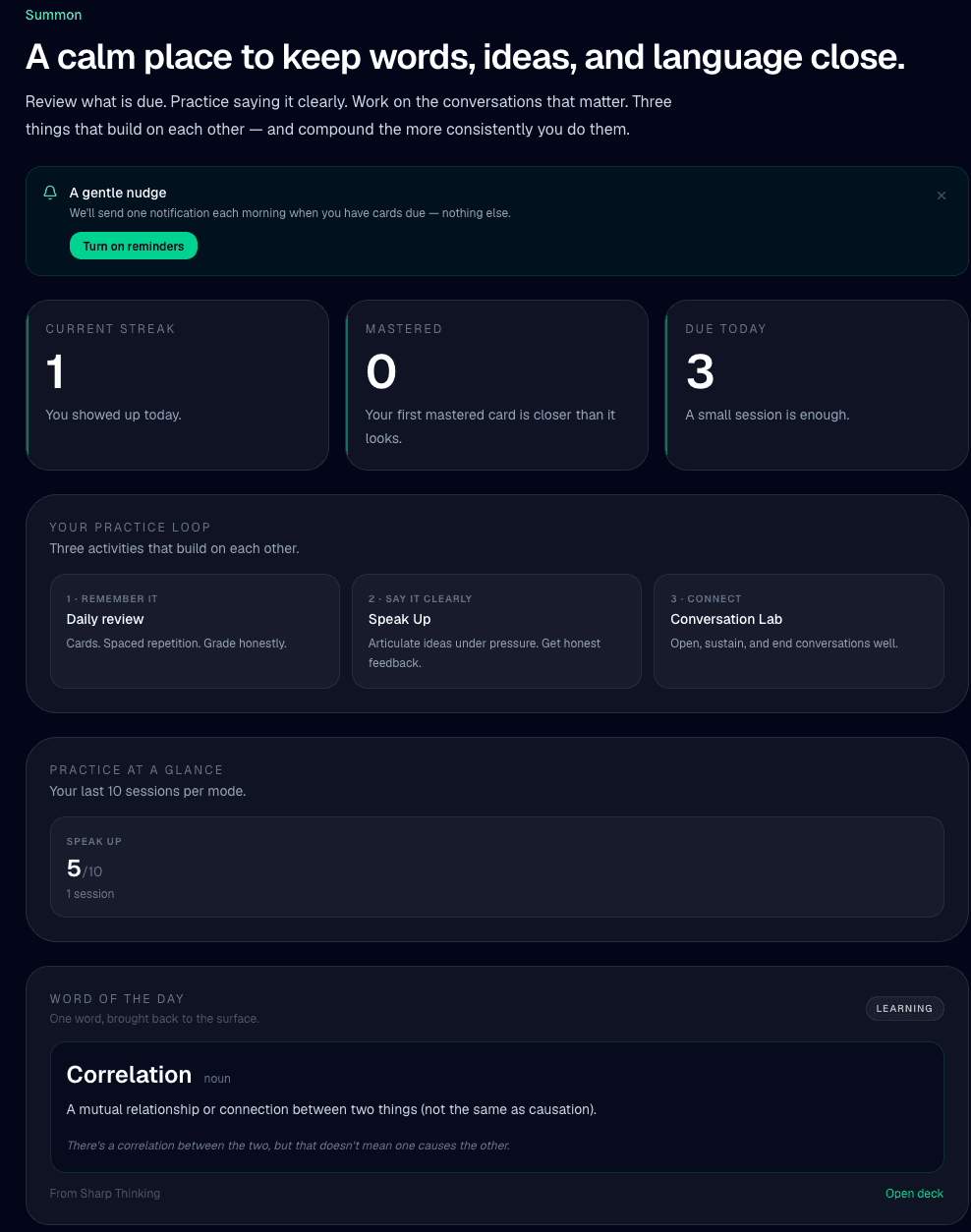
The 10-Minute Daily Habit That Compounds Into a Much Sharper Communicator
Long study sessions feel productive. But for communication skills, consistency beats intensity. Here's why 10 minutes a day outperforms a weekend workshop — and what those 10 minutes should actually contain.

How to Make New Words Stick: Memory Techniques That Actually Work
Most vocabulary techniques feel productive but don't produce durable recall. The techniques that actually work are designed around how memory consolidates — not how studying feels.

Imposter Syndrome at Work: Why High Achievers Go Quiet in Rooms They Should Own
Imposter syndrome doesn't just create anxiety — it creates silence. Understanding why highly capable people underperform verbally reveals a more useful approach than positive self-talk.

What to Do When a Conversation Runs Dry: How to Rescue Any Lull
The awkward silence isn't inevitable. Most conversation lulls have a structure — and knowing the three recovery moves that work gives you a reliable way back before the silence becomes permanent.

The Best Way to Practice Public Speaking When You Don't Have an Audience
Most public speaking advice assumes you have access to a group. When you don't, the standard recommendation — record yourself — captures very little of what makes real speaking hard.

Why Your Vocabulary Is the Hidden Driver of Speaking Confidence
The hesitation before you speak is often a vocabulary problem disguised as a confidence problem. When the word is already close to the surface, the gap between thought and speech disappears.

How to Think on Your Feet: A Framework for Answering Anything Without Freezing
Impromptu speaking isn't a talent. It's a trained reflex built from frameworks and repeated practice. Here's the structure used by the best off-the-cuff speakers — and how to make it automatic.

The Elevator Pitch Formula That Works in 60 Seconds (And How to Practice Until It Feels Natural)
Most elevator pitches fail not because the idea is bad, but because the delivery hasn't been earned. A three-part structure helps — but fluency only comes from practicing out loud.

How to Stop Saying Um: The Real Reason You Use Filler Words (And How to Break the Habit)
Filler words aren't a nervous habit — they're a cognitive load symptom. Understanding why you say um and uh is the first step to speaking with the pauses that actually sound confident.

Small Talk Isn't Small: Why Conversation Fluency Is a Learnable Skill
Most people who struggle socially believe their problem is confidence. Research suggests the real issue is cognitive load — and that conversation fluency, like any skill, can be deliberately trained.
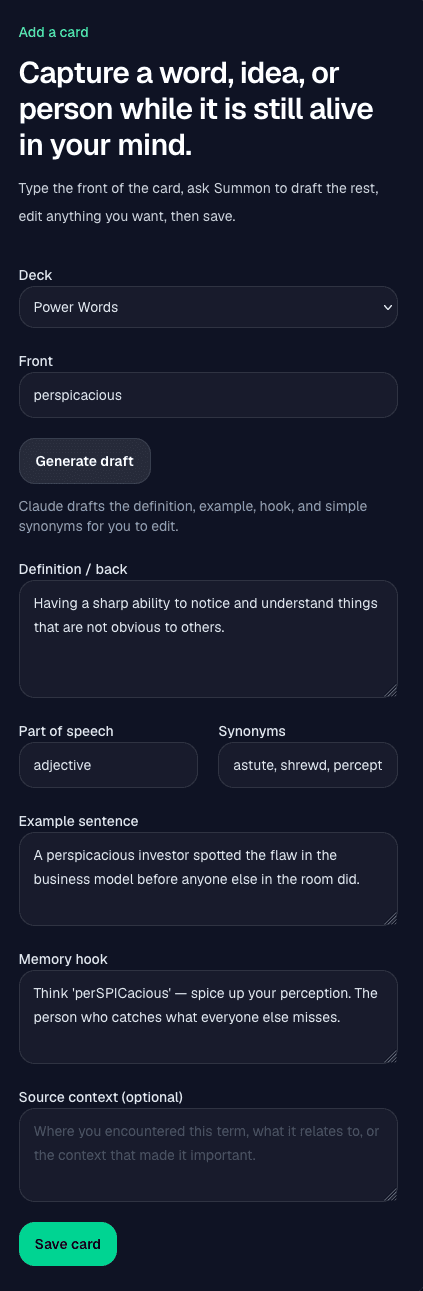
How to Build Vocabulary That Actually Sticks (It's Not What You Think)
Reading widely won't build your vocabulary the way most people believe. The gap between passive exposure and active command is larger than almost any learner realises — and there's a better way.
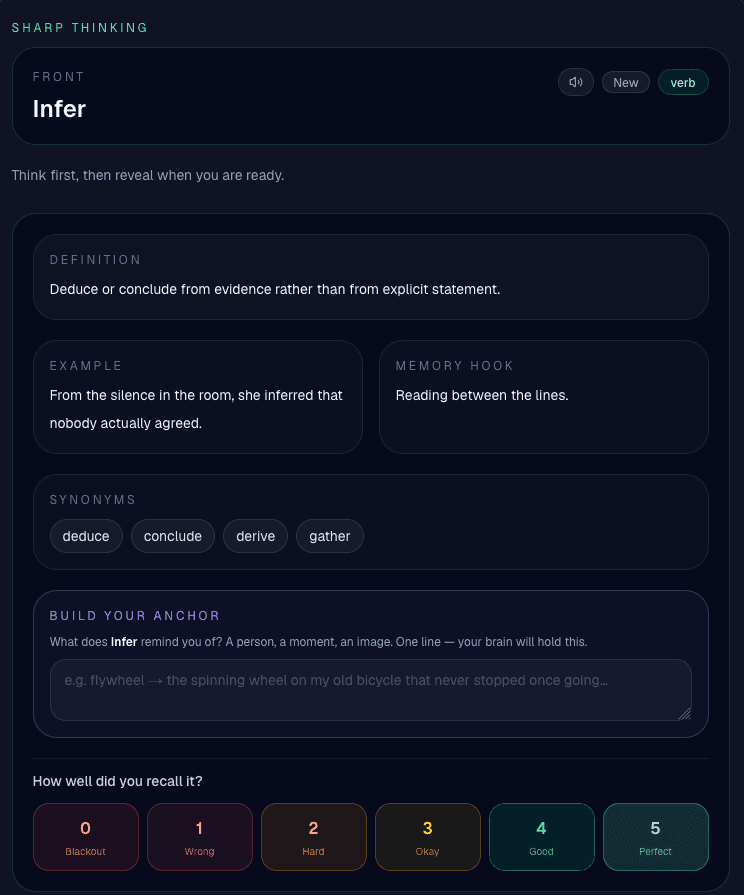
The Forgetting Curve: Why You Lose 70% of New Information Within 24 Hours
Ebbinghaus discovered in 1885 that we forget most new information within a day. The implications for how you should study, practice, and retain anything are significant.

Why You Go Blank in Important Conversations — And How to Fix It
You had the answer. The words were right there. Then someone was watching and they were gone. This isn't a confidence problem — it's a retrieval problem, and there's a specific way to address it.
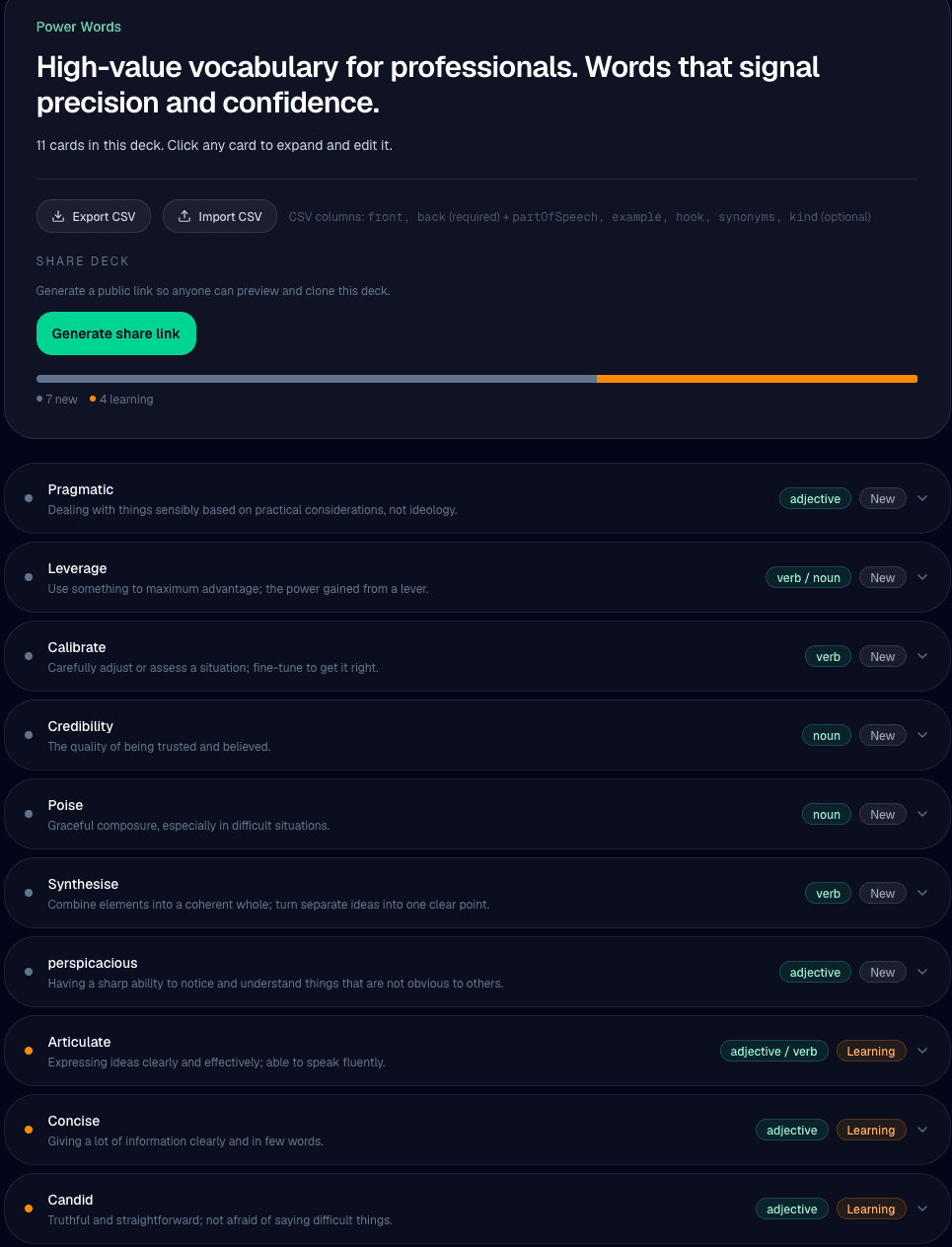
How Spaced Repetition Actually Works (And Why Timing Is Everything)
Most people review things too early or too late. Spaced repetition finds the optimal window — and the science behind it changes how you should think about learning anything.